

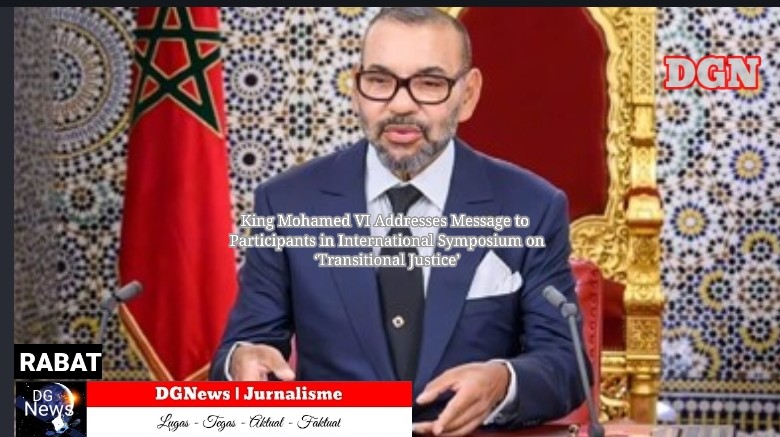
Ladies and Gentlemen, the transitional justice process in Morocco led to a unique, ground-breaking experience. It helped achieve a qualitative leap in the country’s political experience – a process which led to a smooth, harmonious, consensual democratic transition. Best practices were also built upon to consolidate the foundations of the rule of law and the institution-based state.
Through the recommendations made by the Equity and Reconciliation Commission – which also made proposals on public policy and emphasized the need to further promote the constitutional protection of human rights – it was possible to lay down a regulatory framework for broad-based reforms. They included the implementation of constitutional and legislative reforms, the creation of consultative and institutional mechanisms to break with past violations, the proper management of public affairs based on justice and the rule of law, and the promotion of a fresh dynamic within society.
With that in mind, I was keen to make sure human rights were fully reflected in the constitution, in legislation and in public policies, knowing that they range from the political to the environmental sectors, and from economic to social and cultural considerations. Concurrently with that, I set up the institutions and constitutional mechanisms needed to protect the full range of human rights.
Thus, I have personally seen to it that the concept of regional justice is given concrete substance in development policies, and that the principle of collective grievance redress is reflected in our development plans. I have also sought to make sure – whenever possible – those underserviced regions are no longer marginalized when it comes to achieving development and benefitting from the dividends of progress in the Kingdom of Morocco. As one can see, these are major reconciliation measures with history and in terms of regional development planning.
More importantly, this keen interest has enabled a number of regions in Morocco – which were significantly lagging behind in terms of development – to close the gap. Some of them have even become leaders in the regional development process.
Today, there is unanimity – including among objective observers – on the success of the development model currently implemented in our southern provinces. It is a model based on solidarity, complementarity and equal opportunity between the Kingdom’s different provinces. As a result, the face of our recovered provinces has changed for the better. Today, our southern provinces are an attractive destination for investment and are home to countless development programs and large-scale infrastructural projects.
Ladies and Gentlemen, thanks to this internationally acclaimed experience, Morocco was the first to introduce the concept of transitional justice in its Arab and African regions – an experience that has resonated in a number of Middle-Eastern and North African countries.
The Moroccan model has made a significant contribution to developing transitional justice – both as a concept and in practical terms. It has also opened up new vistas for transitional justice, not just in our region, but also at continental and international levels.
However, our accomplishments in the areas of preserving and enforcing human rights, promoting development and building democratic institutions, do not mean all is perfect. Nevertheless, and as recognized by the international community, this model attests to a truly authentic, emerging democracy.
Ladies and Gentlemen, I hope the working sessions programmed to discuss this topic will highlight the best practices of a number of countries, including Morocco, especially the interactions between transitional justice processes and legislative, institutional and constitutional reforms. Just as important is the need to highlight the roles of parliaments, public institutions and civil society in implementing the recommendations made by the bodies in charge of transitional justice.
I am sure this important forum will be an opportunity to identify the impacts of transitional justice processes and their contribution to ending human rights violations on the one hand, and helping with the implementation of the relevant recommendations for the achievement of sustainable reforms, on the other. These two processes are intertwined and inter-related when it comes to protecting individuals and communities, preserving their dignity and ensuring respect for their rights.
I hope the Moroccan experience will get the attention it deserves in your discussions and deliberations as one of the landmarks of the contemporary political landscape in Morocco – a state steeped in history.
I extend a warm welcome to you all and wish you every success. Wassalamu alaikum warahmatullah wabarakatuh.” (PERSISMA/Ed)